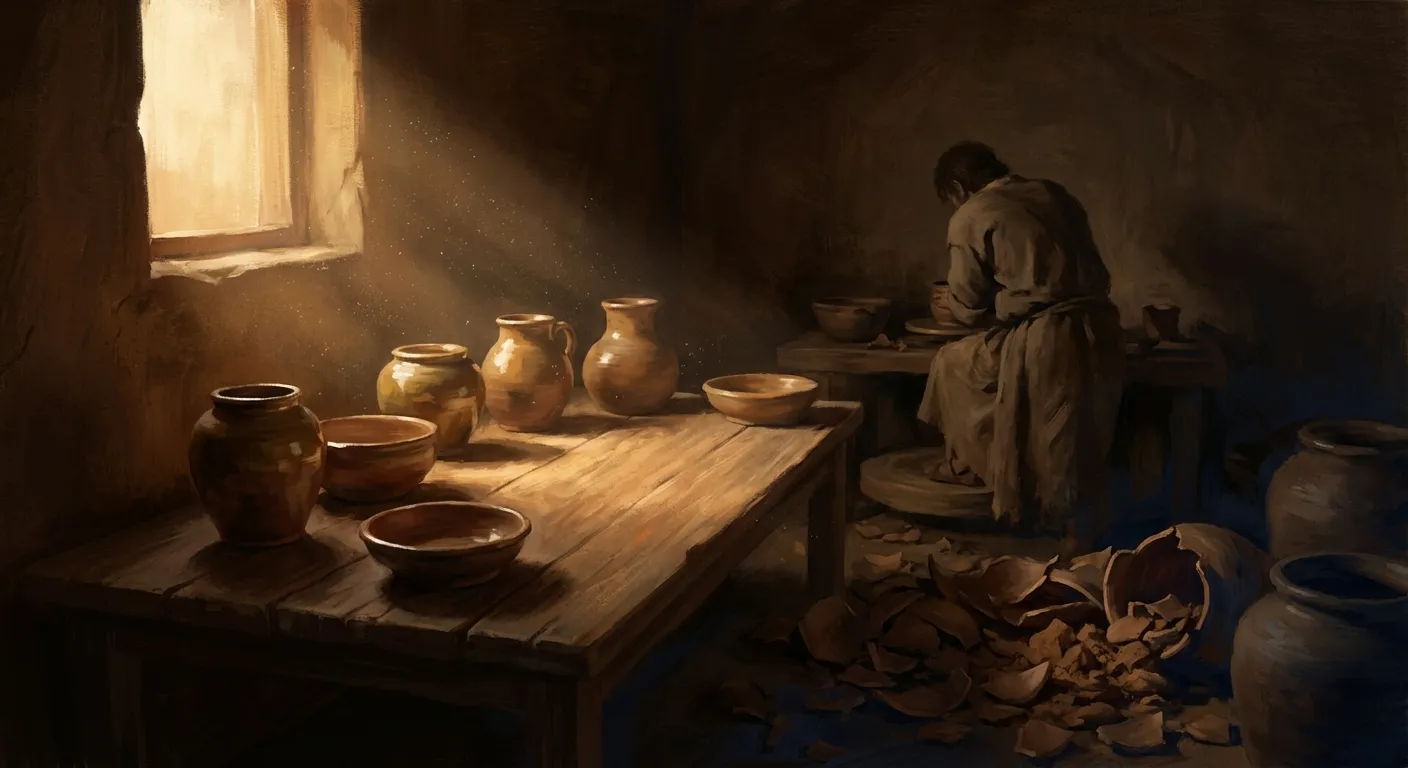
Few tensions in Scripture feel as jarring as the gap between divine tenderness and divine wrath. In one breath, the Psalmist declares that “The LORD is good to all, and His mercies are over all His works” (Psalm 145:9). In another, the prophet Jeremiah records God’s terrifying words: “I will dash them against each other, both the fathers and the sons together… I will not show pity nor be sorry nor have compassion so as not to destroy them” (Jeremiah 13:14). And within the same psalm that celebrates universal mercy, we read that “The LORD keeps all who love Him, but all the wicked He will destroy” (Psalm 145:20).
Is this a contradiction? Is the God of the Bible schizophrenic—loving one moment and ruthless the next? Or does careful examination reveal a coherent portrait of divine character that our modern sensibilities have flattened into confusion?
The Question at the Heart of the Objection
If God is “good to all,” how can He also destroy the wicked without pity?
This is not a trivial question. Critics of Christianity point to these passages as evidence of an incoherent deity—a God invented by different authors with incompatible theologies, later stitched together by editors who didn’t notice the seams. The objection carries emotional weight: we want God to be universally merciful, and the language of merciless destruction offends our sense of how a good being should act.
But the objection assumes something that deserves scrutiny: that “goodness to all” and “judgment on the wicked” are mutually exclusive categories. What if they are not? What if, properly understood, they are necessary complements—two sides of the same righteous character?
Where We Stand
Before proceeding, let me state my commitments transparently. I approach this question as a Christian who holds Scripture as the final authority on God’s nature and actions. I believe God is sovereign over all reality, that human reason is real but fallen, and that the Bible, rightly interpreted, presents a coherent revelation of who God is. I do not come to harmonize at any cost—but I do come expecting that apparent contradictions in Scripture often dissolve under careful analysis, because the God who inspired it is not confused.
The Strongest Case for Contradiction
Let’s give this objection its due weight. A fair reading of these texts does present a genuine tension:
Psalm 145:9 — “The LORD is good to all, and His mercies are over all His works.”
This is an unqualified universal statement. “All” means all. His mercies extend to “all that he has made”—not just believers, not just Israel, but the totality of creation. This sounds like unconditional cosmic benevolence.
Psalm 145:20 — “The LORD keeps all who love Him, but all the wicked He will destroy.”
Now the universal scope narrows dramatically. Preservation is conditional on loving God. And the wicked? They face not correction, not rehabilitation, but destruction. The Hebrew verb here (yashmid) means to annihilate, to blot out completely.
Jeremiah 13:14 — “I will dash them against each other, both the fathers and the sons together,” declares the LORD. “I will not show pity nor be sorry nor have compassion so as not to destroy them.”
This is the most visceral text. God Himself announces violent, indiscriminate-seeming destruction. Fathers and sons—the very fabric of society—smashed like pottery. And the triad of negation—“not pity, not spare, not have compassion”—seems designed to close every door of mercy.
A skeptic can reasonably ask: Which is it? Is God’s mercy over all His works, or does He annihilate without compassion? The texts, read flatly, seem irreconcilable.
Why This Objection Resonates
This tension bothers us for reasons both legitimate and fallen.
Legitimately, we are made in God’s image and possess a real sense of justice. We know that goodness and cruelty don’t mix. We rightly recoil from the thought of a deity who is arbitrarily kind and arbitrarily vicious. If God exists, He should be consistent.
But our fallenness also shapes how we read these texts. We live in a culture of expressive individualism, where “love” means unconditional affirmation and “judgment” feels like hate. We’ve imbibed a therapeutic understanding of God—a cosmic counselor who exists to make us feel accepted. Against this backdrop, any talk of divine wrath sounds primitive, tribal, or abusive.
Moreover, the human heart—as Scripture diagnoses it—suppresses truth in unrighteousness (Romans 1:18). We want a God without wrath, because a God with wrath is a God who might hold us accountable. The objection that God’s judgment contradicts His goodness often reveals more about our discomfort with moral accountability than about any actual inconsistency in the text.
Getting the Categories Right
Before we can resolve the tension, we need to clarify what these texts are actually claiming. Much confusion arises from category errors—reading these passages as if they’re making the same kind of statement about the same kind of recipients in the same kind of context.
Category 1: The Scope of “All”
When Psalm 145:9 says God is “good to all,” what does “all” refer to? The parallel clause tells us: “His mercies are over all His works.” The “all” is creation—the totality of God’s works. This is a statement about God’s providential care for the cosmos: rain falls, crops grow, animals are fed, existence continues. This is what theologians call general providence or common grace—the undeserved favor God extends to all creatures simply by sustaining them in being.
This is not a statement about salvation. It does not mean all people will be saved, or that God will never judge anyone. It means God’s goodness undergirds the very fabric of reality.
Category 2: The Conditionality of Preservation
Psalm 145:20 introduces a different category: covenantal relationship. God keeps “all who love Him”—a specific subset of humanity defined by their response to God. The wicked, defined by their opposition to God, face destruction. This is not arbitrary; it’s relational. Love for God brings preservation; rejection of God brings ruin.
Category 3: The Context of Covenant Judgment
Jeremiah 13:14 operates in yet another framework: covenant lawsuit. Jeremiah is not describing God’s general disposition toward creation. He is announcing the legal consequences of Israel’s covenant-breaking. The Mosaic covenant (Deuteronomy 28) explicitly spelled out blessings for obedience and curses for rebellion. Judah had filled up the measure of its apostasy—idolatry, injustice, stubborn refusal to repent. God, as the covenant Judge, was now executing the sanctions they had agreed to when they entered the covenant.
The “wine jars” metaphor earlier in Jeremiah 13 makes this clear: the people thought they would be filled with prosperity, but instead they would be filled with the wine of God’s wrath—a judicial sentence, not capricious cruelty.
What the Hebrew Actually Says
The original language sharpens these distinctions considerably.
Psalm 145:9 — The Nature of Divine Goodness
The Hebrew word tov (טוֹב) here functions not merely as a moral quality (“God is righteous”) but as a relational quality (“God acts beneficently”). The phrase rachamav (רַחֲמָיו)—“his mercies”—derives from the Hebrew word for “womb” (rechem). This is visceral, maternal compassion. And the preposition al (“over”) suggests a covering, a canopy. God’s womb-like compassion is the atmosphere in which all creation exists.
But note: this is descriptive of God’s providential stance, not promissory of universal salvation.
Psalm 145:20 — The Grammar of Preservation and Destruction
Here the Hebrew verbal stems tell the story:
-
Shomer (שׁוֹמֵר) — “keeps” — is a Qal active participle, indicating God’s characteristic, ongoing action. God is continually, habitually the Guardian of those who love Him.
-
Yashmid (יַשְׁמִיד) — “will destroy” — is a Hiphil imperfect of shamad. The Hiphil stem is causative: God doesn’t merely allow the wicked to perish; He actively causes their destruction. The imperfect tense points to a future certainty—this is determined, inevitable.
The syntax creates a stark antithesis: continuous preservation for lovers, certain annihilation for the wicked. And the repetition of “all” (kol) in both halves emphasizes completeness: all who love Him are kept; all who are wicked are destroyed.
Jeremiah 13:14 — The Intensity of Judicial Wrath
The verb nippats (נִפַּץ) — “dash to pieces” — is in the Piel stem, which intensifies the action. This isn’t merely “break” but “shatter violently, pulverize.” The imagery connects to the wine jar metaphor: the people are vessels that will be smashed against one another.
Then comes the devastating triad:
- Lo-echmol — “I will not pity” (Qal)
- Lo-achus — “I will not spare” (Qal)
- Lo-arachem — “I will not have compassion” (Piel)
Notice that the third verb—racham, the same root as the “mercies” in Psalm 145:9—appears here in the Piel (intensive) and is negated. The womb-like compassion that covers all creation is being actively, intensively withdrawn from covenant-breaking Judah.
This is not a contradiction of Psalm 145:9. It is a covenantal reversal—the judicial removal of grace from a nation that had exhausted God’s patience through centuries of apostasy.
The Manuscript Evidence
Some might wonder whether these tensions arose from scribal errors or editorial stitching. The textual evidence suggests otherwise.
Psalm 145’s “Missing” Verse
Psalm 145 is an acrostic—each verse begins with successive letters of the Hebrew alphabet. But in the Masoretic Text (the standard Hebrew Bible), the verse beginning with Nun (נ) is missing. Interestingly, the Dead Sea Scrolls and the Septuagint (Greek translation) preserve this verse: “God is faithful in his words, and gracious in all his works.”
This recovered verse reinforces the theme of universal benevolence—it doesn’t soften the judgment of verse 20. The textual tradition preserves both the cosmic goodness and the destruction of the wicked without apparent discomfort.
Jeremiah 13:14’s Stability
The Greek Septuagint version of Jeremiah is about 12.5% shorter than the Hebrew, with many passages rearranged. However, Jeremiah 13:14’s language of merciless judgment is stable across all traditions—Masoretic Text, Septuagint, Dead Sea Scrolls. No scribe softened it. The terrifying triad of “no pity, no spare, no mercy” was deliberately preserved.
The Christian Response: Common Grace and Saving Grace
How does Christian theology reconcile these texts? Through a distinction that emerges from Scripture itself: common grace versus saving grace.
Common Grace is the undeserved favor God shows to all creatures—elect and non-elect alike—by restraining sin’s full destructive effects and maintaining the created order. Rain falls on the just and the unjust (Matthew 5:45). God gives life and breath to all people (Acts 17:25). The wicked prosper, at least temporarily. This is Psalm 145:9—God’s providential goodness extended to “all His works.”
Common grace is real benevolence, not mere tolerance. God genuinely sustains and provides for people who will never love Him. But common grace is not saving. It preserves life; it does not redeem souls.
Saving Grace is God’s particular mercy toward those He has chosen to rescue from sin and death. This grace produces the love for God mentioned in Psalm 145:20—“all who love Him.” Those who receive saving grace are preserved eternally. Those who don’t—the wicked who persist in rebellion—face the judgment their sins deserve.
This distinction means God can simultaneously be “good to all” (common grace) and “destroy the wicked” (saving grace withheld, justice executed). There is no contradiction because the “goodness” of Psalm 145:9 operates in a different category than the “destruction” of Psalm 145:20 and Jeremiah 13:14.
The Goodness of Judgment
Here’s where we must challenge a modern assumption: that judgment is incompatible with goodness.
Consider: if a king is “good to all” in his realm but refuses to punish murderers and oppressors, is he actually good? His failure to execute justice means the vulnerable suffer. His “mercy” to the wicked is cruelty to their victims.
Psalm 145 itself operates within this framework. The psalm celebrates God as King (verse 1). In the ancient Near East, a good king was defined by two things: providing for the weak and suppressing the wicked. These were not in tension—they were complementary aspects of the same royal goodness.
When verse 20 says God will destroy the wicked, it is not contradicting verse 9’s universal mercy. It is explaining what that mercy requires. To be good to “all his works,” God must remove those who destroy and corrupt His works. The annihilation of the wicked is an act of goodness toward creation.
Jeremiah 13:14 fits the same logic. Judah’s leaders had become oppressors—exploiting the poor, shedding innocent blood, filling the land with idolatry that degraded human dignity. God’s “merciless” judgment was, in fact, mercy toward the victims of Judah’s wickedness. The withdrawal of compassion from the oppressors was the exercise of compassion toward the oppressed.
Anticipating Objections
“But doesn’t ‘good to all’ mean God should save everyone?”
No—because “good” in Psalm 145:9 refers to providential care, not redemptive salvation. The parallel clause defines the scope: “all His works.” This is about creation and sustenance, not about eternal destiny. Universalism (the belief that all will be saved) cannot be derived from this text without ignoring verse 20’s explicit statement that the wicked will be destroyed.
“Isn’t it cruel to destroy people for not loving God?”
This assumes a neutral starting point—that humans are innocent until they fail to meet some arbitrary religious test. Scripture’s diagnosis is different: all humans are sinners who have rejected God, suppressed truth, and pursued evil (Romans 3:10-18). The remarkable thing is not that God judges the wicked, but that He shows goodness to anyone at all. Common grace is undeserved; saving grace is unmerited. Judgment is simply justice.
“How can a loving God ‘not pity’?”
When Jeremiah 13:14 says God will not pity, it means the time for relenting—for holding back the legal penalty—has expired. It does not mean God’s nature has changed from loving to hateful. It means Judah’s century of covenant-breaking had finally exhausted the patience that had delayed judgment. The same God who “does not afflict willingly or grieve the sons of men” (Lamentations 3:33) can, after long forbearance, execute the sentence that justice requires.
The Gospel Reframes Everything
Ultimately, the tension between divine goodness and divine judgment is resolved not in abstract theology but in Jesus Christ.
At the cross, God’s mercy and God’s wrath converge. The same God who is “good to all” poured out His wrath on His own Son—not because Jesus was wicked, but because Jesus bore the sins of those who would be saved. The judgment that should have fallen on us fell on Him. The mercy we could never earn was purchased by His blood.
This means Christians do not minimize God’s wrath or apologize for His judgment. We needed that wrath to be real, because if God simply overlooked sin, the cross would be pointless. The severity of Jeremiah 13:14 magnifies the grace of the gospel: this is what we deserved, and this is what Christ endured in our place.
And the goodness of Psalm 145:9 is also fulfilled in Christ. In Him, God’s providential care becomes redemptive rescue. The same mercy that sustains all creation becomes, for those in Christ, the mercy that saves eternally.
Confidence Without Triumphalism
Is God good to all, or just a few?
The biblical answer is: both, but in different senses. God is good to all His works through common grace—providential sustenance extended to every creature. God is savingly good to those who love Him—preserving them through special grace. And God is justly severe toward the wicked—executing the judgment their rebellion deserves.
These are not contradictions. They are complementary expressions of a God who is simultaneously Creator, Savior, and Judge. A God who was only merciful would not be good—He would be an enabler of evil. A God who was only wrathful would not be good—He would be a tyrant. The God of Scripture is neither. He is the King whose goodness requires both mercy and justice, whose love for His creation demands the destruction of those who corrupt it.
The apparent contradiction dissolves when we let Scripture define its own terms rather than imposing our therapeutic, wrath-allergic assumptions onto the text.
An Invitation
Does this resolution satisfy you? Where do you find it most challenging? Perhaps you struggle with the concept of divine wrath itself—or perhaps you see tensions I haven’t addressed.
I invite honest engagement. Read Psalm 145 in its entirety. Read Jeremiah 13 in its historical context. Consider whether the distinction between common grace and saving grace makes sense of the data. And ultimately, consider whether the cross of Christ—where mercy and judgment meet—doesn’t reveal a God far more coherent, and far more glorious, than our objections imagined.
For further study: Herman Bavinck’s treatment of common grace in Reformed Dogmatics, Vol. 3; D.A. Carson’s The Difficult Doctrine of the Love of God; and the Westminster Confession of Faith, chapters 3-5.