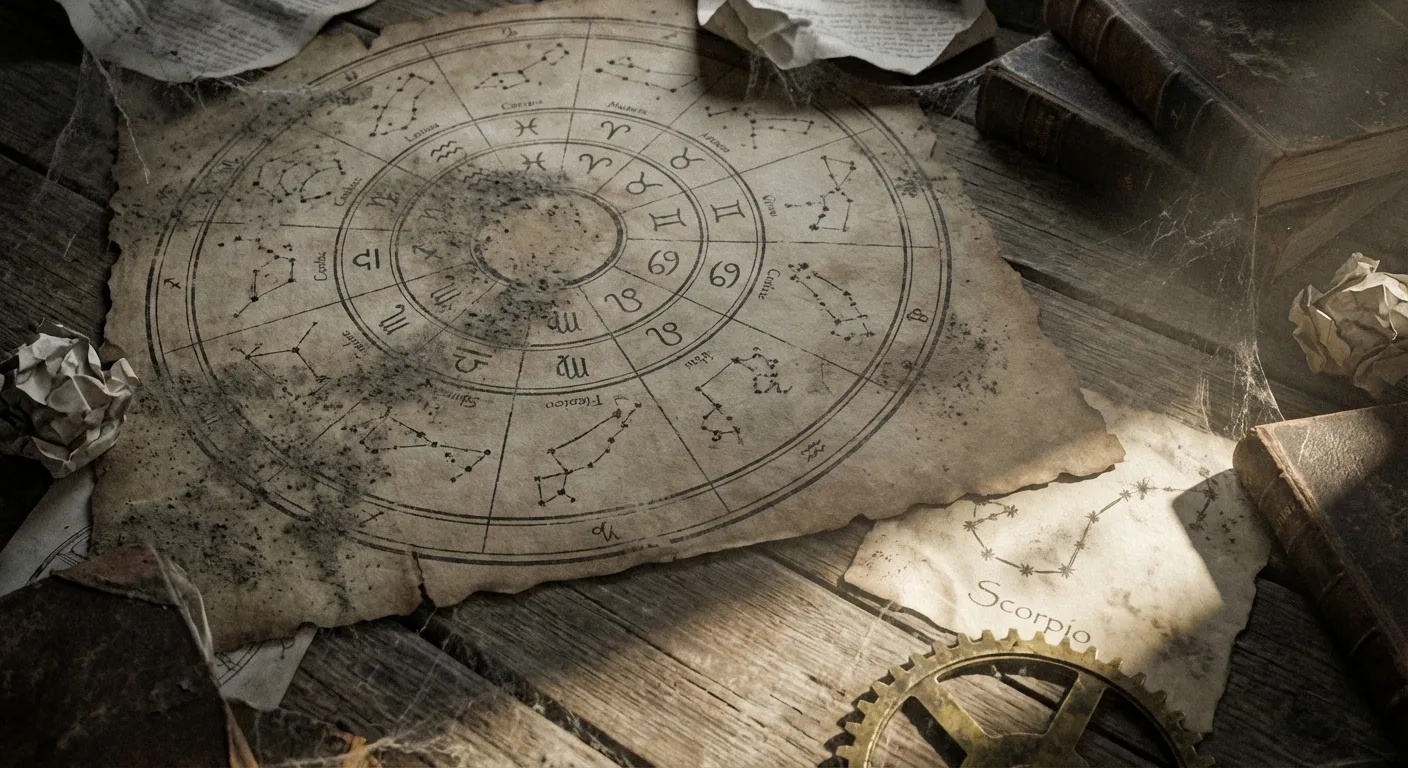
We began this section with an ambitious claim: that the entire Bible is an allegorical narrative encoding the Precession of the Equinoxes—the slow wobble of Earth’s axis that causes the vernal equinox to drift through the zodiac constellations over a 25,772-year cycle.
Zeitgeist presented three specific arguments:
- Moses destroying the Golden Calf represents the transition from the Age of Taurus to the Age of Aries
- Jesus and his fish imagery represent the Age of Pisces
- The “end of the world” is actually the end of Pisces and the beginning of Aquarius
If these claims were true, the implications would be profound. Biblical figures would be zodiacal symbols, not historical persons. Biblical eschatology would be astronomical prediction, not divine promise. The entire Judeo-Christian tradition would collapse into coded astrology.
After four articles examining each claim in detail, a very different picture has emerged.
The astrological ages thesis doesn’t just fail to prove its case. It’s historically impossible, textually unsupported, and methodologically incoherent. Let’s review what we’ve found.
Part 18: Moses and the Age of Aries
The Claim: Moses shattering the Golden Calf symbolizes the transition from Taurus to Aries. Jews blow the ram’s horn (shofar) to commemorate this zodiacal shift.
What the Evidence Shows:
Chronological Impossibility
The twelve-sign zodiac was a Babylonian innovation that reached the Mediterranean world in the Hellenistic period (4th–3rd centuries BCE). The standardized system didn’t exist when the Exodus narratives were composed.
You cannot encode a zodiacal transition into texts written before the zodiac existed in your culture. The claim is anachronistic—like arguing that medieval monks hid references to quantum physics in their manuscripts.
The Egyptian Context
The Golden Calf wasn’t a zodiac symbol. It was an Egyptian idol.
The Israelites had spent generations in Egypt, where bull worship was central to religious life. The Apis bull, the Mnevis bull, and other bovine deities permeated Egyptian culture. When the people demanded “gods who will go before us,” they reverted to familiar Egyptian forms.
The text explicitly makes this connection: “These are your gods, O Israel, who brought you up out of the land of Egypt” (Exodus 32:4). The calf represents Egyptian idolatry, not Babylonian astronomy.
The Shofar’s Actual Meaning
The ram’s horn isn’t a zodiacal commemoration. Jewish tradition consistently connects it to:
- The Binding of Isaac — The ram provided as a substitute sacrifice (Genesis 22)
- The Sinai Theophany — The shofar blast when God descended on the mountain (Exodus 19)
- Eschatological Gathering — The trumpet that will summon scattered Israel home (Isaiah 27:13)
These explanations appear throughout rabbinic literature. The zodiacal explanation appears nowhere in Jewish sources.
Verdict
The Moses/Aries claim imposes a Hellenistic framework onto texts that predate Hellenistic influence. It ignores the Egyptian context the text itself provides. It invents meanings for the shofar that no Jewish source supports. The claim is historically impossible.
Part 19: Jesus and the Age of Pisces
The Claim: Jesus represents the Age of Pisces. His fishermen disciples, the feeding miracles with fish, and the ichthys symbol all encode Piscean imagery.
What the Evidence Shows:
Geographic Reality
The single most important fact about fish in the Gospels: Jesus ministered around the Sea of Galilee, a fishing region.
Capernaum, Bethsaida, Magdala—these were fishing villages. The local economy revolved around the lake’s catch. Archaeological evidence confirms sophisticated fish-processing facilities in the area.
When Jesus recruited fishermen as disciples, he wasn’t encoding zodiacal symbolism. He was recruiting from the local population. In Galilee, that meant fishermen.
The Jewish Background of “Fishers of Men”
The metaphor “fishers of men” doesn’t come from astrology. It comes from Jeremiah 16:16, where God sends “fishers” to gather Israel.
Jesus adapts this prophetic image for his mission of gathering people into God’s kingdom. The metaphor is Jewish and eschatological, not pagan and astronomical.
John P. Meier notes there’s “no real parallel” to Jesus’ salvific use of fishing imagery in pagan literature or mystery religions. The metaphor is distinctly Jewish.
The Feeding Miracle’s Source
The feeding of the five thousand with loaves and fish echoes Elisha’s miracle in 2 Kings 4:42–44. The Gospel writers present Jesus as a “greater Elisha”—standard Jewish typology.
The “two fish” aren’t Pisces. They’re the standard relish of Galilean peasants—dried or salted fish eaten with bread. It’s what you’d expect a crowd to carry for a day trip.
The Ichthys as Acrostic
The fish symbol emerged as a Greek acrostic: ΙΧΘΥΣ = Ἰησοῦς Χριστός Θεοῦ Υἱός Σωτήρ (Jesus Christ, Son of God, Savior).
Early Christian sources that explain the ichthys cite the acrostic, baptismal water associations, or Gospel fish stories—never the zodiac. If early Christians understood themselves as living in the “Age of Pisces,” someone would have mentioned it. No one did.
Verdict
The Jesus/Pisces claim mistakes geography for astrology. It ignores the Jewish prophetic background of fishing imagery. It overlooks the Elisha typology behind the feeding miracles. It misrepresents the acrostic origin of the ichthys. Every piece of evidence has a better explanation than astrology.
Part 20: The End of the Age as Aquarius
The Claim: The “end of the world” is a mistranslation—aiōn means “age,” referring to the zodiacal Age of Pisces ending and Aquarius beginning. The “man with a pitcher” in Luke 22:10 symbolizes Aquarius the Water Bearer.
What the Evidence Shows:
The Jewish Meaning of “Age”
Zeitgeist is correct that aiōn means “age,” not “world.” But it catastrophically misidentifies which kind of “age.”
In Jewish apocalyptic thought, “the age” referred to the two-age schema: “this age” (the current era of sin and suffering) and “the age to come” (God’s kingdom). This had nothing to do with the zodiac.
When Jesus speaks of “the end of the age,” he’s using established Jewish vocabulary for the consummation of history—when God intervenes to defeat evil and establish his kingdom. It’s eschatological, not astronomical.
The Imminence Problem
If the “end of the age” meant the transition to Aquarius (c. 2150 CE), Jesus was referring to an event 2,000+ years away.
But Jesus taught the end was imminent: “This generation will not pass away until all these things take place” (Mark 13:30). The early church lived in constant readiness for his return.
If Jesus had taught a 2,000-year zodiacal cycle, there would have been no “delay of the parousia” crisis. Early Christians wouldn’t have been puzzled by his non-return because they’d have known they had millennia to wait.
The imminent expectation proves the original teaching wasn’t astrological.
The Man with the Pitcher
The “man carrying a pitcher of water” in Luke 22:10 isn’t Aquarius. He’s a recognition signal.
In first-century culture, carrying water in ceramic jars was women’s work; men used wineskins. A man with a water jar would stand out in a crowd—a conspicuous marker for a pre-arranged meeting point.
Jesus was arranging the Passover meal discreetly. The man with the jar was practical tradecraft, not astrological prophecy.
Verdict
The Aquarius claim commits a category mistake—assuming that “age” in Jewish apocalyptic discourse meant the same thing as “age” in Hellenistic astrology. It ignores the imminent expectation that pervades the Gospels and early church. It strips the man with the pitcher from his narrative context to force an astrological reading. The claim collapses under scrutiny.
The Pattern of Failure
Across all three claims, the same methodological errors recur:
Anachronism
The astrological ages thesis projects later astronomical frameworks onto earlier texts. The twelve-sign zodiac wasn’t part of Israelite culture when the Exodus traditions were composed. The Precession of the Equinoxes, while known to Greek astronomers, wasn’t a framework through which Jews interpreted their scriptures.
Zeitgeist reads the Bible as if it were written by 19th-century Theosophists rather than ancient Semitic peoples with their own distinctive worldview.
Context Stripping
The thesis works only by ripping symbols from their contexts.
- The Golden Calf makes sense as Egyptian idolatry; it requires violence to read it as Taurus.
- The fish make sense as Galilean economy; forcing them into Pisces ignores geography.
- The “man with a pitcher” makes sense as Passover logistics; seeing Aquarius requires ignoring the narrative.
Every astrological reading is worse than the straightforward historical reading.
Parallelomania
The fundamental method is what Samuel Sandmel called “parallelomania”—finding superficial similarities and inferring connection.
Bull = Taurus. Ram = Aries. Fish = Pisces. Water carrier = Aquarius.
But similarity doesn’t prove causation. Bulls were religiously significant in Egypt long before the zodiac. Rams were valuable livestock before anyone mapped constellations. Fish were caught in Galilee because there was a lake, not because the vernal equinox was in Pisces.
The thesis cherry-picks coincidental similarities while ignoring the massive contextual evidence that explains these symbols without astrology.
Silence of Sources
Perhaps most damning: no ancient Jewish or Christian source interprets these texts astrologically.
If the Bible encoded zodiacal ages, someone would have noticed. Jewish scribes who copied these texts for centuries would have commented. Early Christian writers who debated every verse would have mentioned it. Hellenistic Jews like Philo, who loved allegorical interpretation, would have explored it.
The silence is deafening. The astrological interpretation is a modern invention imposed on ancient texts that show no awareness of it.
What the Bible Actually Teaches
Strip away the astrological speculation, and what remains is far more interesting than zodiacal mechanics.
Moses and the Golden Calf
The Golden Calf narrative confronts us with the fickleness of the human heart. A people who witnessed God’s power, heard his voice, and received his covenant turned to idolatry within forty days.
It’s a story about sin, betrayal, and the need for mediation. Moses intercedes for the people. The covenant is renewed. Grace persists despite failure.
This is theology with teeth—uncomfortable, convicting, hopeful. Reducing it to “the Age of Taurus ended” drains it of meaning.
Jesus and the Fish
The fish imagery connects Jesus to ordinary life in Galilee. His disciples weren’t aristocrats or scholars—they were working men with calloused hands. The feeding miracles show him meeting physical needs, not just spiritual ones. The post-resurrection breakfast on the beach is intimate, humble, real.
The “fishers of men” metaphor transforms mundane work into cosmic vocation. What these men did for a living becomes a paradigm for their new calling.
This is incarnational theology—God entering human particularity, redeeming ordinary life. Zodiacal abstraction misses the point entirely.
The End of the Age
The “end of the age” is about hope—hope that evil won’t have the last word, that injustice will be answered, that God’s purposes will be fulfilled.
Jewish apocalypticism arose from suffering. It was the theology of people under occupation, people who had seen their temple destroyed and their nation scattered. The “age to come” was their hope that God hadn’t abandoned them.
Jesus announced that this hope was breaking into history. The kingdom was near. God was acting. The long night was ending.
This is existentially urgent in a way that astronomical cycles are not. The Precession of the Equinoxes grinds on indifferently whether you repent or not. The kingdom of God demands a response.
The Appeal of the Astrological Thesis
Given how badly it fails, why does the astrological ages theory attract adherents?
It Offers a Master Key
The thesis promises to decode the entire Bible with a single principle. This is intellectually seductive—one framework explains everything. The reality that different texts require different interpretive approaches is less satisfying.
It Flatters the Interpreter
Accepting the thesis puts you in an elite group who see what billions have missed. This gnostic appeal—secret knowledge for the initiated—is psychologically powerful.
It Neutralizes Without Rejecting
The astrological reading allows people to retain some respect for religious tradition while denying its truth claims. The Bible isn’t false; it’s just misunderstood. This feels more sophisticated than crude dismissal.
It Fits New Age Sensibilities
“The Age of Aquarius” carries positive cultural associations—peace, enlightenment, spiritual evolution. Reframing biblical eschatology as astrological transition replaces divine judgment with impersonal progress.
These appeals are real, but they don’t make the thesis true.
Conclusion
The claim that the Bible encodes the Precession of the Equinoxes through zodiacal symbolism fails completely:
Historically: The twelve-sign zodiac postdates the composition of the relevant biblical texts. The thesis is anachronistic.
Textually: Every alleged astrological symbol has a better explanation in its actual literary and historical context—Egyptian idolatry, Galilean economy, Jewish prophecy, Passover logistics.
Methodologically: The thesis relies on parallelomania (superficial similarity = connection) while ignoring massive contrary evidence.
Evidentially: No ancient source—Jewish or Christian—interprets these texts astrologically. The thesis is a modern invention.
The Bible isn’t a star map. It’s a collection of texts written by ancient Semitic peoples wrestling with questions of God, covenant, sin, redemption, and hope. These texts deserve to be read on their own terms, in their own contexts, with attention to what they actually say.
The astrological ages theory obscures rather than illuminates. It replaces theology with astronomy, history with speculation, and meaning with mechanism.
The stars may be beautiful, but they don’t interpret scripture. That requires actually reading the text.
Author’s Note (2026): This article was originally written in 2013 but was never published at the time. Prior to publication in 2026, it has been carefully reviewed and updated to ensure that historical references, scholarly claims, and source material are accurate, current, and properly represented.